Adult acne is a common and often misunderstood skin condition that can persist or develop later in life. This guide is designed for adults who want clear, medically grounded information before deciding how to manage it.
Adult acne can feel unexpected, particularly if it appears after years of relatively clear skin or continues well beyond adolescence. It is often assumed to be a short-term or teenage concern, yet clinical guidance recognises that acne can affect people at any stage of adulthood. This can create uncertainty, especially when treatments that worked previously no longer seem effective.
Part of the confusion comes from how varied adult acne can be. For some, it follows a clear hormonal pattern, while for others it is influenced by a combination of skin biology, product use, and lifestyle factors. The visible symptoms may look similar, but the underlying causes and appropriate treatments can differ. This is why a structured, evidence-aware approach is important, rather than relying on general advice or isolated products.
This guide explains how adult acne develops, what typically drives it, and how it is assessed in a clinical setting. It also outlines the treatment pathways available in the UK, from skincare and prescription options to clinic-based treatments, so you can understand how different approaches are used. The aim is to provide clarity, helping you recognise what may be relevant to your skin and what steps to consider next.
To begin, it helps to understand what adult acne is and why it can appear later in life.
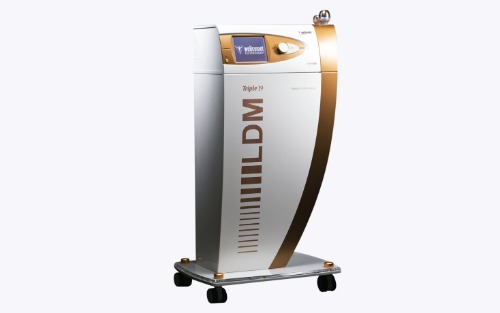
LDM® Triple is a non-invasive ultrasound-based treatment used in aesthetic and dermatology clinics to support skin health, tissue regulation, and the Treatment of Acne-Prone or inflamed skin. This guide is for anyone trying to understand what it is, how it works, and whether it may be relevant to their skin concern.
Adult acne refers to acne that continues beyond the teenage years or develops for the first time in adulthood. In the UK, it is increasingly recognised as a common concern, particularly among women in their late twenties through to their forties and beyond.

Adult acne is typically grouped into two categories:
Persistent acne: continues from adolescence into adulthood
Late-onset acne: develops for the first time after the age of 25
In both cases, the underlying process is similar:
The skin produces excess oil (sebum)
Dead skin cells block the hair follicles (pores)
Bacteria contribute to inflammation
This leads to visible spots such as blackheads, whiteheads, and inflamed lesions
While the mechanism is the same, adult acne often behaves differently, which is why it can feel less predictable and harder to manage.
Adult acne tends to follow distinct patterns:
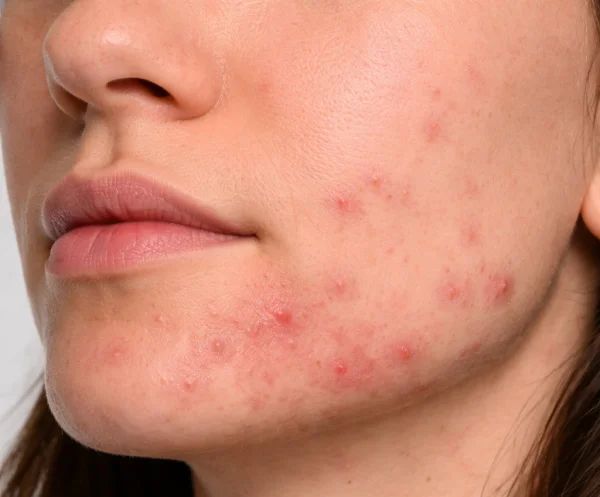
Location: more common along the jawline, chin, and lower cheeks rather than the forehead
Type of spots: often deeper, more inflamed, and sometimes tender
Frequency: may appear in cycles rather than being constant
Skin type: can occur alongside dryness or sensitivity, not just oily skin
These differences are important because they influence both diagnosis and treatment decisions. Products or routines that worked in your teens may not be suitable later on.
There is rarely a single cause. Adult acne usually reflects a combination of internal and external factors:
Hormonal changes: fluctuations linked to menstrual cycles, pregnancy, or perimenopause
Skin sensitivity: increased reactivity to products or environmental factors
Lifestyle influences: stress, sleep disruption, and diet may contribute in some individuals
Product use: certain skincare or cosmetic products can block pores if not suited to your skin
For some women, adult acne may also be linked to underlying hormonal conditions such as polycystic ovary syndrome (PCOS), particularly if it appears suddenly or alongside other symptoms.
A common concern is that adult acne seems slower to respond to treatment. This is partly because:
Inflammation may sit deeper within the skin
Hormonal influences can continue over time
The skin barrier may be more sensitive, limiting treatment options
This does not mean it cannot be managed effectively, but it often requires a more structured and consistent approach rather than quick fixes.
Adult acne is a recognised medical skin condition with clear biological causes, even if it appears later than expected. Understanding how it differs from teenage acne is the first step towards choosing appropriate, realistic, and tailored treatments for your skin.
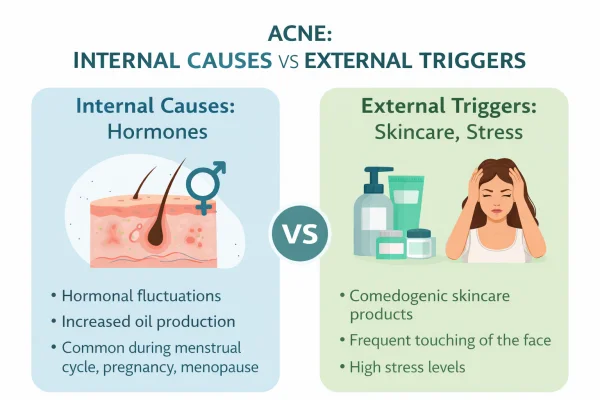
Understanding the causes of adult acne helps explain why it can feel persistent and unpredictable. In most cases, adult acne develops through a combination of internal factors, such as hormones, and external triggers affecting the skin.

Hormones are one of the most common drivers of adult acne, particularly in women.
Androgens, such as testosterone, increase oil production in the skin
Fluctuations can occur during menstrual cycles, pregnancy, and perimenopause
Breakouts often appear along the jawline and chin in a cyclical pattern
In some cases, persistent or severe acne may be linked to underlying conditions such as polycystic ovary syndrome (PCOS), especially if accompanied by irregular periods or excess hair growth.
What this means for you:
If acne follows a predictable monthly pattern or appears later in life without an obvious cause, a hormonal influence is likely and may require targeted treatment.
Adult skin can still produce excess oil, even if it also feels dry or sensitive.
Sebaceous glands produce sebum to protect the skin
In acne-prone skin, excess sebum mixes with dead skin cells and blocks pores
This creates an environment where inflammation can develop
This process happens beneath the surface of the skin, which is why acne is not linked to poor hygiene
What this means for you:
Over-cleansing or using harsh products can disrupt the skin barrier without addressing the underlying cause.
Certain lifestyle factors can contribute to flare-ups, although they are rarely the sole cause.
Stress may influence hormonal activity and inflammation
A diet with a high glycaemic index may worsen acne in some individuals
Smoking has been linked to adult acne in some cases
Skincare and cosmetics can block pores if they are not labelled non-comedogenic
What this means for you:
Small adjustments can support treatment, but they are unlikely to resolve acne on their own.
Some medications and health conditions can trigger or worsen acne.
Steroid medications and some treatments for mental health or epilepsy may contribute.
Certain contraceptive pills can either improve or worsen acne,e depending on the formulation.on
Hormonal imbalances may play a role in persistent cases
What this means for you:
If acne develops suddenly or changes significantly, it may be worth reviewing medications or discussing this with a healthcare professional.
One of the main reasons adult acne can feel difficult to manage is that a single factor rarely drives it.
Hormones may increase oil production
Skincare products may block pores
Stress may influence inflammation
These factors often overlap, which is why treatment usually needs to be tailored rather than relying on a single product or approach.
A combination of hormonal activity, skin processes, and external influences typically causes adult acne. Identifying which of these is most relevant to you is an important step in choosing an effective and sustainable treatment plan.
The location of adult acne can offer useful clues about underlying patterns, particularly when breakouts are consistent or recurring. While it does not provide a diagnosis on its own, it can help guide a more tailored treatment approach.
In adults, acne most commonly appears on the lower part of the face.
Jawline and chin: often linked to hormonal fluctuations
Lower cheeks: may be associated with inflammation and sensitivity
Around the mouth: can be influenced by skincare, cosmetics, or irritation
This distribution differs from teenage acne, which is more likely to affect the forehead and upper face.
What this means for you:
If your breakouts are concentrated in the same lower-face areas, particularly in a cyclical pattern, a hormonal component is more likely to be involved.
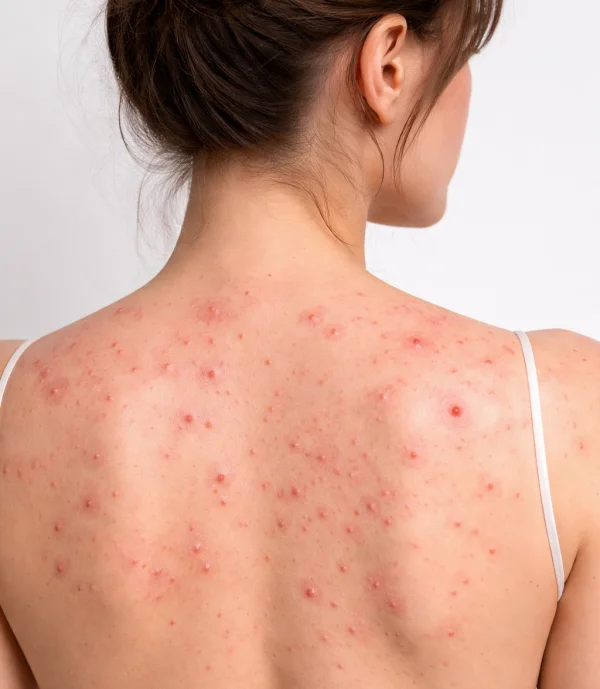
Adult acne can also affect areas beyond the face, though this varies by individual.
Back (bacne): linked to oil production, sweat, and friction from clothing
Chest: may be influenced by hormones, heat, and occlusive fabrics
Shoulders: often associated with friction from clothing, bags, or sportswear
These areas tend to have a high density of sebaceous glands, making them more prone to blocked pores.

What this means for you:
Body acne may require different treatment formats, such as washes or systemic treatments, as creams can be harder to apply consistently.
It is common to see charts suggesting that acne location directly reflects specific internal causes. In practice, this is often oversimplified.
The same area can be affected by multiple factors
Hormones, skincare, and lifestyle can overlap
Skin sensitivity and barrier function also play a role
A proper assessment considers both location and severity, along with your wider health and history.
What this means for you:
Use location as a guide, not a conclusion. A consistent pattern is helpful, but it should be interpreted alongside other factors.
Adult acne tends to follow recognisable patterns, particularly around the lower face and certain areas of the body. While these patterns can provide useful context, they are only one part of understanding your skin and choosing the right treatment approach.
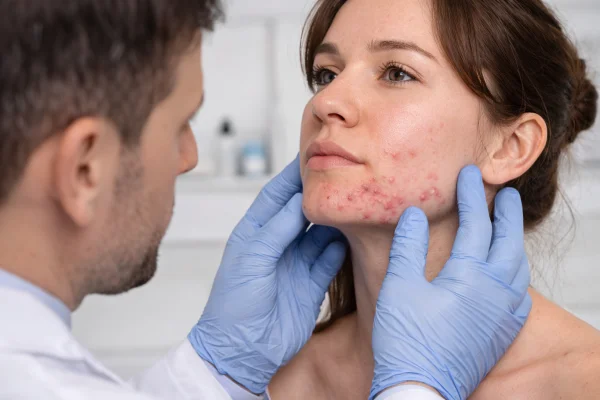
Adult acne is usually diagnosed through a simple clinical assessment rather than tests or scans. In the UK, this process focuses on identifying the type and severity of acne so that treatment can be matched appropriately.

A healthcare professional will assess your skin in a structured but straightforward way.
Visual examination of affected areas such as the face, chest, or back
Identification of lesion types, including blackheads, whiteheads, papules, pustules, or deeper nodules
Discussion of your medical history, skincare routine, and any previous treatments
Acne is generally recognised by its appearance and distribution, so further investigations are not usually required
What this means for you:
Most people can receive a clear diagnosis during a standard consultation without needing additional tests.
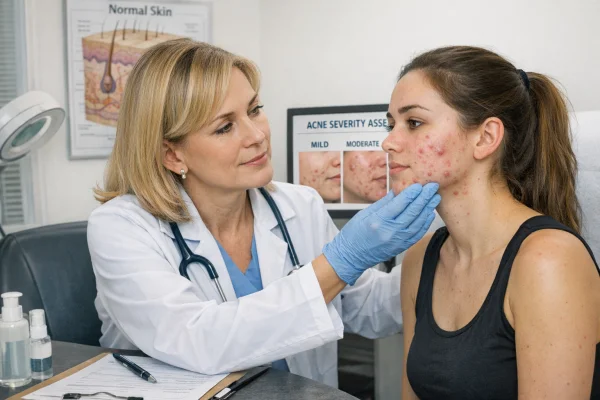
A key part of assessment is determining the severity of your acne. This helps guide treatment choices and expectations.
Mild acne: mostly blackheads and whiteheads, with occasional inflamed spots
Moderate acne: more widespread inflammation, including papules and pustules
Severe acne: deeper, painful nodules or cysts, sometimes with early scarring
Severity is not just about the number of spots. It also considers:
Depth of inflammation
Risk of scarring
Impact on confidence or wellbeing
What this means for you:
Two people with similar-looking acne may be offered different treatments depending on how their skin responds and how those treatments affect them.
Although not routine, additional checks may be appropriate in certain situations.
Sudden onset of acne in adulthood, particularly in women
Symptoms suggesting hormonal imbalance, such as irregular periods or excess hair growth
Acne that does not respond to standard treatments
In these cases, further assessment may include blood tests or referral to a specialist to explore possible underlying causes.
What this means for you:
If your acne pattern changes or feels unusual, it is reasonable to ask whether further investigation is needed.
Without a clear assessment, it is easy to try multiple products or treatments without a consistent plan.
A proper diagnosis helps to:
Match treatment to the correct severity level
Avoid unnecessary or ineffective products
Reduce the risk of long-term complications such as scarring
It also provides a baseline, making it easier to review progress over time and adjust treatment if needed.
Diagnosing adult acne is usually a straightforward process based on clinical assessment and severity grading. This step is essential for creating a realistic, appropriate, and tailored treatment plan for your skin.
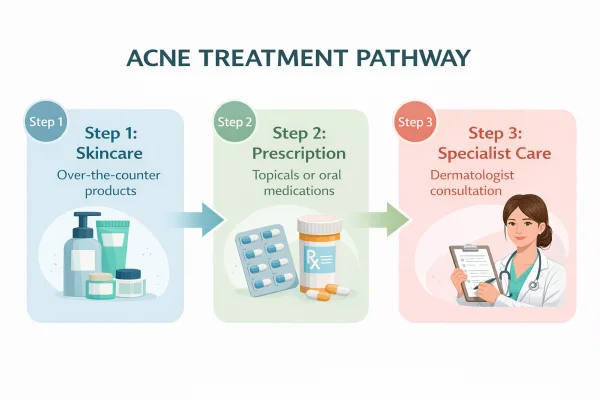
Treatment for adult acne in the UK is usually guided by severity, skin sensitivity, and how your acne has responded to previous approaches. Most plans follow a stepwise structure, starting with topical treatments and progressing to prescription or clinic-based options if needed.
For mild or early-stage adult acne, pharmacy and skincare treatments are often the starting point.
Benzoyl peroxide helps reduce bacteria and inflammation
Azelaic acid can improve both acne and pigmentation
Niacinamide supports oil regulation and skin barrier function
Non-comedogenic moisturisers and SPF help maintain skin balance
It is important to apply treatments consistently to affected areas, not just individual spots.
What this means for you:
These options can be effective for mild acne, but results take time and may be limited if deeper or hormonal factors are involved.
If acne is persistent or moderate in severity, a GP may recommend prescription treatments.
Topical retinoids help prevent blocked pores
Combination treatments (for example, retinoid with benzoyl peroxide or antibiotics) are commonly used
Oral antibiotics may be prescribed for inflammatory acne, usually for a limited duration
Treatment is typically reviewed after around 12 weeks to assess progress and next steps
What this means for you:
Prescription treatments are often more effective than over-the-counter options, but they require consistency and follow-up.
Where acne is linked to hormonal patterns, specific treatments may be considered.
Combined oral contraceptive pills can help regulate hormone levels
Spironolactone may be used in some cases to reduce androgen effects on the skin
These treatments are usually considered when acne is persistent, cyclical, or not responding to standard approaches.
What this means for you:
Hormonal treatments can be helpful for the right patient group, but they require medical assessment and monitoring.
For more severe or resistant acne, referral to a dermatologist may be recommended.
Isotretinoin is a specialist treatment used for severe acne or acne that has not responded to other therapies
Treatment is closely monitored due to potential side effects
Clear referral pathways exist within the UK healthcare system
What this means for you:
This option is usually considered when other treatments have not been effective, rather than as a first step.
Clinic-based treatments can support acne management, particularly alongside medical or skincare approaches.
Chemical peels help exfoliate and reduce blocked pores
LED light therapy may support inflammation reduction
Microneedling is more commonly used for acne scarring rather than active acne
Ultrasound-based treatments such as LDM Triple are used in some clinics to support skin healing and reduce inflammation
These treatments vary in suitability depending on the severity of acne and skin type.
What this means for you:
Clinic treatments can complement a broader plan, but they are not usually a standalone solution for moderate-to-severe acne.
A structured approach helps avoid over-treatment or ineffective combinations.
Start with topical or skincare-based treatments for mild acne
Progress to prescription options if needed
Consider hormonal or specialist treatments for persistent cases
Use clinic treatments as supportive options where appropriate
Regular review is important to assess the response and adjust the plan.
Adult acne treatment in the UK is based on a stepwise, evidence-informed approach that balances effectiveness with safety. The most appropriate option depends on your acne severity, underlying causes, and how your skin responds over time.

One of the most common concerns with adult acne is how long treatment takes to work. In most cases, improvement is gradual rather than immediate, and understanding typical timelines can help you avoid changing treatments too early.

Most acne treatments follow a similar pattern of response.
Early stages may show little visible change in the first few weeks
Some treatments, particularly retinoids, can cause a temporary worsening before improvement
Noticeable results often begin after 6 to 8 weeks
Full assessment is usually made at around 12 weeks
This timeframe reflects how the skin renews itself and how long it takes to reduce inflammation and prevent new spots forming.
What this means for you:
A lack of immediate results does not mean the treatment is ineffective. Stopping or switching too early can interrupt progress.
Consistency is one of the most important factors in successful acne treatment.
Treatments need to be applied regularly, even when improvement is slow
Skipping applications or using products inconsistently reduces effectiveness
Combining too many products can irritate the skin and delay progress
For antibiotic treatments, there are also clear time limits to reduce resistance, which is why regular review is important.
What this means for you:
Following a structured plan, rather than reacting to short-term changes, is key to achieving steady improvement.
Not all acne responds at the same pace. Several factors can affect timelines:
Severity: Deeper or more inflamed acne often takes longer to settle
Hormonal influences: ongoing hormonal fluctuations can prolong breakouts
Skin sensitivity: limits how quickly treatments can be introduced or increased
Adherence to treatment: consistent use improves outcomes
In some cases, multiple treatment adjustments may be needed before the most effective approach is found.
What this means for you:
Variation is normal. Progress is usually measured over months rather than weeks.
Regular review helps ensure your treatment remains appropriate.
If there is no improvement after 12 weeks, treatment may need to be adjusted
If acne worsens significantly or causes discomfort, reassessment may be needed sooner
Persistent or severe acne may require escalation to prescription or specialist care
A structured review prevents unnecessary delays in finding a more effective approach.
Adult acne treatment takes time, and most approaches require at least 6 to 12 weeks before meaningful improvement can be assessed. Staying consistent and allowing enough time for treatments to work are important to achieving stable, long-term results.
One of the main concerns with adult acne is whether it will leave lasting marks. While not all acne leads to scarring, the risk increases with deeper inflammation and delayed or inconsistent treatment.

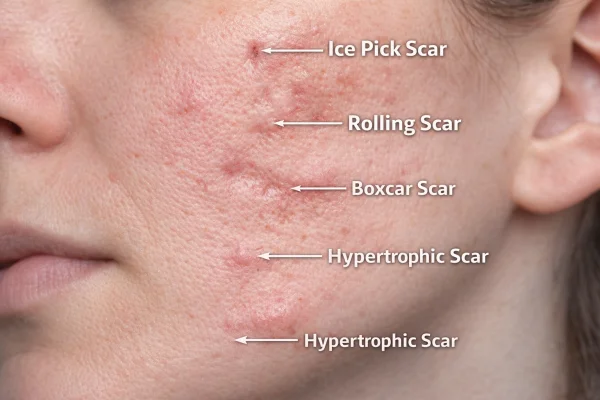
Acne scars develop when inflammation affects the deeper layers of the skin.
Inflamed lesions, such as nodules or cysts, can damage the surrounding tissue
The skin’s healing response may produce too little or too much collagen
This can lead to indented (atrophic) or raised (hypertrophic or keloid) scars
Post-inflammatory pigmentation can also occur:
Red marks (erythema) or darkened areas (hyperpigmentation) after spots heal
These are not true scars but can persist for several months
Picking or squeezing spots increases the likelihood of both scarring and pigmentation changes.
What this means for you:
The more inflamed and persistent the acne, the higher the risk of lasting skin changes if not managed appropriately.
There are simple, evidence-based steps that can help minimise long-term damage.
Avoid picking or squeezing spots, as this increases inflammation and tissue injury
Start treatment early, particularly for moderate to severe acne
Use non-comedogenic skincare, including moisturiser and sunscreen
Apply SPF daily, as sun exposure can worsen pigmentation and slow healing
Follow treatment plans consistently, rather than switching products frequently
Supporting the skin barrier is also important, especially when using active treatments that may cause dryness or irritation.
What this means for you:
Prevention focuses on reducing inflammation and protecting the skin while it heals.
If marks or changes in texture begin to appear, early intervention can be helpful.
Persistent redness or pigmentation may benefit from targeted skincare or clinic treatments
Early textural changes may be assessed by a qualified practitioner
Treatment options vary depending on skin type and severity
Clinic-based treatments such as chemical peels, microneedling, or other regenerative approaches are typically considered once active acne is under control.
What this means for you:
Addressing early signs can help prevent more permanent changes, but timing and treatment choice are important.
Not all cases of adult acne lead to scarring, but the risk increases with inflammation and delayed treatment. Taking a consistent, preventative approach can help protect the skin and reduce the likelihood of long-term damage.
Many people try to manage adult acne at first, but there are clear points where professional advice becomes important. Knowing when to seek help can reduce delays in effective treatment and lower the risk of longer-term skin changes.

Certain patterns suggest that over-the-counter or self-directed approaches may not be enough.
Acne that persists beyond 8 to 12 weeks despite consistent treatment
Moderate to severe breakouts, including painful or deep lesions
Early signs of scarring or pigmentation changes
Acne that is worsening over time, rather than stabilising
A noticeable impact on confidence or wellbeing
These indicators suggest that a more structured, medically guided approach may be needed.
What this means for you:
Seeking advice early does not mean your acne is severe; it simply allows for a clearer plan and avoids unnecessary trial and error.
In the UK, there are two main routes to professional care, each with different considerations.
NHS pathway:
Access via GP referral
Evidence-based prescribing, including topical and oral treatments
Referral to dermatology for specialist care if required
May involve waiting times depending on local services
Private clinics:
Direct access without referral
May offer a combination of medical-grade skincare and clinic treatments
Typically shorter waiting times
Costs vary depending on treatment type and duration
Both pathways can play a role, depending on your needs, preferences, and how quickly you want to proceed.
What this means for you:
The right pathway depends on your priorities, whether that is cost, speed, or access to specific treatments.
If you decide to seek professional help, choosing the right provider is an important step.
Look for regulated healthcare professionals, such as doctors, nurses, or dermatologists
Check experience in acne management, not just general aesthetics
Expect a full consultation, including medical history and treatment planning
Be cautious of providers offering quick fixes or guaranteed results
A structured consultation should explain:
Your acne type and severity
Recommended treatment options and why
Expected timelines and possible side effects
What this means for you:
A good consultation should leave you informed and clear on next steps, without pressure to proceed.
Seeking professional help for adult acne is often about gaining clarity rather than escalating treatment unnecessarily. Early assessment can lead to a more effective and consistent approach, reducing the risk of ongoing frustration or long-term skin changes.