Acne is one of the most common skin conditions, yet it is often misunderstood. This guide explains what acne is, how it develops in the skin, and why it can appear differently in different people. It is designed for readers who want a clear, evidence-aware understanding before considering treatment options.
Acne is frequently discussed in everyday language as “spots” or “breakouts”, but medically it is a chronic inflammatory skin condition involving the hair follicles and oil-producing glands of the skin. Because it can present in several forms, from mild blackheads to deeper inflammatory lesions, people often find it difficult to determine what type of acne they are experiencing and whether treatment is needed.
Part of the confusion comes from the wide range of information available online. Advice about skincare routines, lifestyle changes, and professional treatments can sometimes overlap or conflict. At the same time, acne can affect people at different stages of life, including adolescence and adulthood, and may appear on areas of the body beyond the face. This variation means that what works for one person may not always be appropriate for another.
This guide explains the key processes behind acne, the different types of spots it can produce, where it commonly appears on the body, and why severity can vary between individuals. The aim is to provide a balanced overview that supports informed, low-pressure decision-making.
To begin, it helps to understand what acne actually is and why it is considered a medical skin condition rather than simply a collection of occasional spots.
LDM® Triple is a non-invasive ultrasound-based treatment used in aesthetic and dermatology clinics to support skin health, tissue regulation, and the Treatment of Acne-Prone or inflamed skin. This guide is for anyone trying to understand what it is, how it works, and whether it may be relevant to their skin concern.
Acne is one of the most common skin conditions worldwide, yet many people are unsure what it actually involves. In simple terms, acne develops when the skin’s hair follicles become blocked with oil and dead skin cells, leading to different types of spots.
Acne, often referred to as acne vulgaris, is a chronic inflammatory skin condition that affects the hair follicles and sebaceous glands.
Key characteristics include:
Acne most commonly appears on:
These areas contain more sebaceous glands, which explains why they are more prone to breakouts.
For many people, acne begins during puberty due to hormonal changes that increase oil production. However, it can also develop in adulthood and may persist for many years.
Most people experience the occasional spot, especially during hormonal changes or stress. Acne differs because it tends to be persistent and involves multiple lesion types across the skin.
Features that distinguish acne from isolated breakouts include:
Understanding this distinction matters because occasional spots often respond to simple skincare adjustments, whereas acne may require structured treatment approaches that target oil production, blocked pores, and inflammation together.
Acne is not simply a matter of poor hygiene or isolated breakouts. It is a complex skin condition involving oil production, pore blockage, and inflammation. Understanding how acne forms is the first step towards recognising why treatments vary and why personalised care is often recommended.
Understanding how acne develops in the skin can make the condition easier to manage and less confusing to treat. Acne does not begin on the surface of the skin; it develops deeper within the hair follicles, where oil production and skin cell turnover take place.
Sebaceous glands are small oil-producing glands connected to hair follicles. Their job is to produce sebum, an oily substance that helps keep the skin hydrated and protected.
In acne-prone skin:
This excess oil creates an environment where acne can begin to develop.
The next stage in the development of acne involves the lining of the hair follicle.
Normally:
In acne-prone skin:
This early stage of acne is often referred to as comedonal acne.
Human skin naturally contains bacteria that usually live harmlessly on the surface. One of these bacteria, Cutibacterium acnes, plays a role in the development of acne.
When a follicle becomes blocked:
As inflammation develops, the blocked follicle may become:
This inflammatory process is what makes acne more visible, uncomfortable, and sometimes more difficult to treat.
Acne develops through a combination of excess oil production, blocked pores, bacterial growth, and inflammation within the skin. Because several processes are involved, effective treatment usually requires addressing more than one factor at the same time.
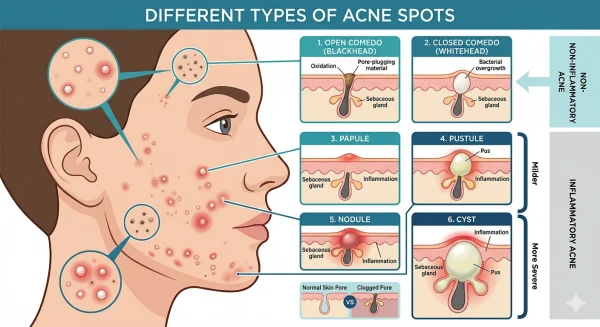
Acne does not appear as a single type of spot. Instead, it includes several lesion types, each reflecting what is happening within the skin and the extent of inflammation.

Recognising these differences helps explain why acne severity can vary and why treatment approaches may change depending on the type of spots involved.
These are often the earliest and mildest forms of acne. They occur when pores become blocked but have not yet developed significant inflammation.
Common features include:
Non-inflammatory acne, often called comedonal acne, is typically mild but can be persistent.
When blocked follicles become inflamed, acne becomes more noticeable and sometimes tender.
These lesions include:
Inflammatory acne can occur across the face, chest, shoulders, or back and may appear in clusters.
In more severe cases, inflammation develops deeper within the skin.
These lesions include:
Severe acne lesions are less common but usually require professional management, as they are more likely to cause long-term skin changes.
Acne includes a range of lesion types, from mild blocked pores to deeper inflammatory spots. Understanding these differences helps explain why acne severity varies and why treatment plans often need to be tailored to the individual.
Acne most often develops in areas of the body where sebaceous glands are more active. These glands produce sebum, the natural oil that helps protect and lubricate the skin. When oil production is higher, the risk of blocked pores and inflammation increases.
As a result, acne tends to appear in predictable areas of the body, particularly those with a greater concentration of oil-producing glands.
The face is the most common location for acne. This is largely due to the high number of sebaceous glands in facial skin.
Breakouts often appear in specific areas:
Because facial skin is more visible and exposed to environmental factors, facial acne can also have a greater impact on confidence and daily routines.
The upper back is another area where acne frequently develops. This is sometimes referred to as bacne.
Contributing factors may include:
Back acne can sometimes be more persistent because the skin in this area is thicker and harder to treat with topical products alone.
Acne on the chest often appears in the upper chest area, where oil glands are also active.
Possible contributing factors include:
It is also important to recognise that some chest breakouts may be folliculitis, a different condition involving inflamed hair follicles, which can appear similar to acne.
Shoulders are commonly affected alongside back acne.
Potential triggers include:
Because the shoulders are exposed to both friction and oil, breakouts in this area can occur even when facial skin is relatively clear.
The neck, particularly along the jawline and upper neck, can develop acne in some individuals.
Possible contributing factors include:
Neck acne may also overlap with other conditions, such as ingrown hairs or folliculitis, which sometimes require different treatment approaches.
Acne tends to appear in areas where oil glands are most active, including the face, back, chest, shoulders, and sometimes the neck. The location of breakouts can provide useful clues about potential triggers and may influence how treatment is approached.

Acne is often associated with teenage years, yet it can affect people at many stages of life. While hormonal changes play an important role, acne is usually influenced by a combination of genetic, hormonal, and environmental factors, which explains why experiences with acne vary so widely between individuals.
For many people, acne first develops during puberty. This stage of life is characterised by significant hormonal changes that directly affect the skin.
Key factors include:
Because these hormonal changes are part of normal development, acne during teenage years is extremely common.
Acne can also appear or persist in adulthood. In recent years, dermatology services have reported an increase in the number of adults, particularly women, seeking treatment for acne.
Adult acne may be influenced by:
Adult acne often appears along the lower face, jawline, and neck, although patterns can vary.
Family history can also influence whether someone develops acne and how severe it becomes.
Important factors include:
These differences help explain why some people develop only occasional breakouts, while others experience persistent acne that requires medical treatment.
Acne can affect teenagers and adults alike, and its development is rarely caused by a single factor. Hormones, genetics, and lifestyle influences all contribute to how acne appears and how long it lasts.
Not everyone experiences acne in the same way. Some people develop a few occasional spots, while others experience more persistent or inflammatory breakouts. Understanding how acne severity is classified helps explain why treatment approaches differ and when professional advice may be appropriate.
Healthcare professionals often describe acne using three broad severity categories. These categories are based on the type and number of spots present, as well as whether inflammation or scarring is developing.
This type of classification helps clinicians decide which treatment options may be appropriate and whether referral to a dermatology specialist is needed.
Acne is a physical skin condition, but it can also affect how people feel about their appearance and confidence.
Factors sometimes associated with acne severity include:
For some individuals, these effects can be significant. Dermatology guidance recognises that the psychological impact of acne is an important factor in treatment decisions.
Acne severity can range from mild blocked pores to deeper inflammatory lesions. Recognising these differences helps explain why treatments vary and why early management can help reduce long-term skin changes.
Before exploring acne treatments, it is helpful to understand what type of acne is present and how it develops in the skin. Acne is not a single condition with a single solution. It involves several biological processes, which means treatment often needs to address more than one factor simultaneously.
Taking time to understand the condition can help people make more informed decisions about skincare, medical treatment, and professional advice.
Acne treatments vary because acne can present in different forms and severity levels.
Factors that influence treatment decisions include:
Because of these variations, treatment approaches may involve different combinations of options.
These can include:
A personalised treatment approach helps address the underlying causes of acne rather than focusing only on visible spots.
Understanding how acne develops and how it varies between individuals helps explain why treatment plans are rarely identical. A careful assessment of skin type, acne severity, and potential triggers is usually the most reliable way to determine appropriate treatment options.